Apps & Platforms
Native-feel iOS and Android apps, and the platforms behind them — shipped to the store, not to a prototype folder.
The work
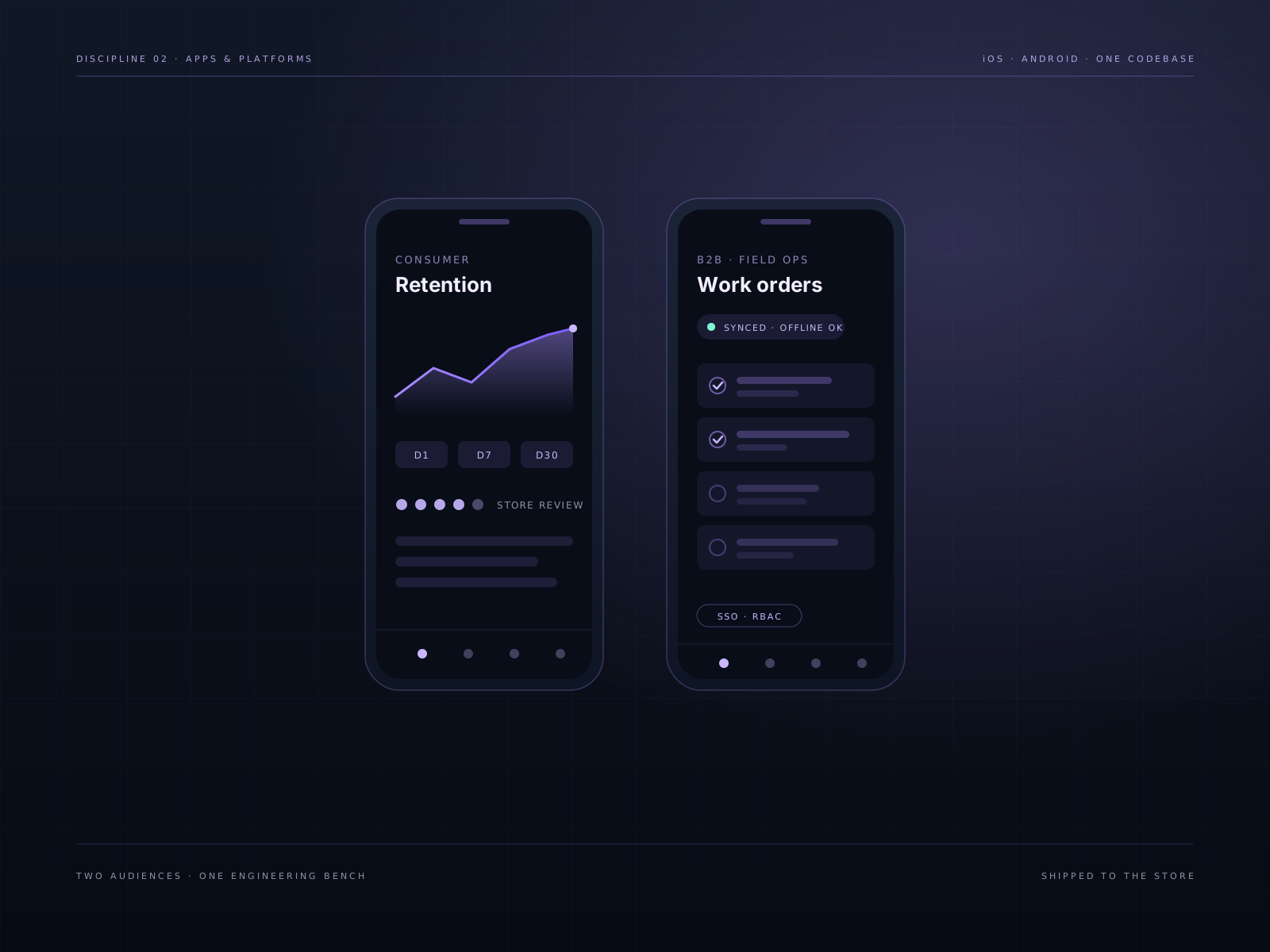
Most agency apps die in TestFlight. We ship to both stores and stay accountable for what happens after the install — activation, retention, crash-free sessions, review velocity. One cross-platform codebase where that's the right economics, native where it isn't. Consumer products get built around the metrics that decide whether an app compounds or churns. Internal and B2B tools get built around the operators who have to use them on a job site with two bars of signal.
Packages
Your package
Native-feel iOS and Android apps, and the platforms behind them — shipped to the store, not to a prototype folder.
Custom System / Web Portal
Custom System / Web Portal
A bespoke web application or client portal — dashboards, roles, and workflows tailored to how your operation actually runs.
- Custom screens & navigation
- Account & auth flows
- Role-based access control
- Backend API connectivity
- Admin dashboard
- 30-day post-launch support
Scoped to your project
You get a fixed quote in writing after a short call.
Talk to a partnerA partner replies within a few hours. Nothing is billed until the scope is agreed in writing.
Every package
- Custom System / Web PortalSelectedA bespoke web application or client portal — dashboards, roles, and workflows tailored to how your operation actually runs.
- Light MVP PlatformA focused MVP to validate your idea fast — the core feature set, real users, and a production-grade foundation to build on.
- Full MVP PlatformA market-ready platform — a richer feature set, real integrations, and the scaffolding to scale past your first cohort of users.
- Consumer App LaunchA consumer app built for the metrics that decide whether it compounds or churns — shipped to both stores, instrumented from the first install.
- B2B / Field Ops AppAn app for the operator on the floor and the executive reading the dashboard — offline-capable, SSO-ready, and auditable enough for your IT team.
- App + Platform BundleThe mobile client and the platform behind it, designed together — one data model, one API, one team, instead of two vendors blaming each other.
Built on
Production tools, chosen because they make a site fast and a system maintainable — not because they are fashionable. These are the same stacks behind our own products.
- Web
Astro · Next.js · React · Tailwind CSS · TypeScript
Statically rendered, so pages arrive as HTML instead of waiting on a framework to boot.
- Platforms & apps
Laravel · NestJS · Flutter · PostgreSQL · MySQL
The same stacks behind our own products, not a demo we read about.
- AI & automation
Claude · OpenAI · Make.com · Retrieval-augmented generation
Built into the operation rather than bolted on as a chatbot.
- Infrastructure
Cloudflare · Vercel · Nginx · Let's Encrypt
Fast globally, and yours — deployed to your account, not locked to ours.
- Commerce & payments
Stripe · PayPal · Maya · GCash
Checkout wired and tested before launch, not left as a to-do.
- Analytics & search
Google Analytics · Search Console · Schema.org · Generative Engine Optimization
Instrumented from day one, and structured for AI answer engines as well as Google.
How we work
A typical engagement, beginning to handoff. Phases compress or expand around the diagnosis — they don’t skip.
- 01 — Scope
Weeks 1–2
Product definition and store strategy
We define the product surface before a screen gets designed — what the app does that mobile web can't, which platform ships first, and what the store listing has to claim. We check the compliance bar early: App Store Review Guidelines, Play Data Safety, and, for Philippine deployments, Data Privacy Act consent flows. You leave with a scoped build, a device matrix, and a submission plan.
- 02 — Design
Weeks 3–5
Flows, design system, platform conventions
We design with the platform conventions rather than against them — iOS and Android users expect different navigation, different gestures, different back-button behaviour. Flows get prototyped and put in front of real users on real handsets before engineering starts. The design system lands in Figma with both platforms specced, alongside the store screenshots and listing copy.
- 03 — Build
Weeks 5–12
Cross-platform engineering against real devices
We build on one cross-platform codebase where the economics justify it and drop to native where they don't — camera, background sync, hardware integrations. We test on a real device matrix, not just simulators, including the mid-range Android handsets most of your users actually carry. Crash reporting, analytics, and feature flags ship from the first internal build.
- 04 — Ship
Weeks 12–14
Store submission, review, and staged rollout
We handle submission, review, and the rejections that come with it — store review is a process, not an event, and a first-time rejection is routine rather than a crisis. Staged rollout on Play, phased release on the App Store, with a crash-rate gate that can halt a rollout automatically. We watch the first 72 hours of live installs with you.
- 05 — Operate
Release train, crash budget, iteration
Apps aren't finished at launch — operating systems ship annually and break things. We hand off a release train, a crash budget your team can enforce, and the instrumentation to tell whether the next feature helped. If you want us to keep running it, that's a retainer, not a lock-in.
Who it’s built for
Consumer apps
An app nobody opens twice is a liability with a maintenance bill. Consumer work is a retention problem long before it's a design problem.
- App Store and Play Store listing, review, and release management
- Onboarding instrumented step by step — we fix where users drop, not where we assume they do
- Push, deep links, and lifecycle messaging that earn the reopen
- In-app purchases and subscriptions wired to a revenue model you can forecast
- D1 / D7 / D30 retention and crash-free rate as launch gates
B2B & internal platforms
The buyer isn't the user. We build for the operator on the floor and the executive reading the dashboard — two different products inside one binary.
- Offline-first sync for field teams with unreliable connectivity
- SSO, role-based access, and audit trails your IT team will approve
- Admin consoles and back-office portals alongside the mobile client
- Enterprise distribution — MDM, managed Play, internal TestFlight tracks
- Per-seat economics modelled before we build, not after
What you get a senior partner on
- Cross-platform (Flutter / React Native) and native
- App Store and Play Store release engineering
- Offline-first sync and local persistence
- Auth, SSO, and role-based access
- In-app purchases and subscription billing
- Crash, analytics, and retention instrumentation